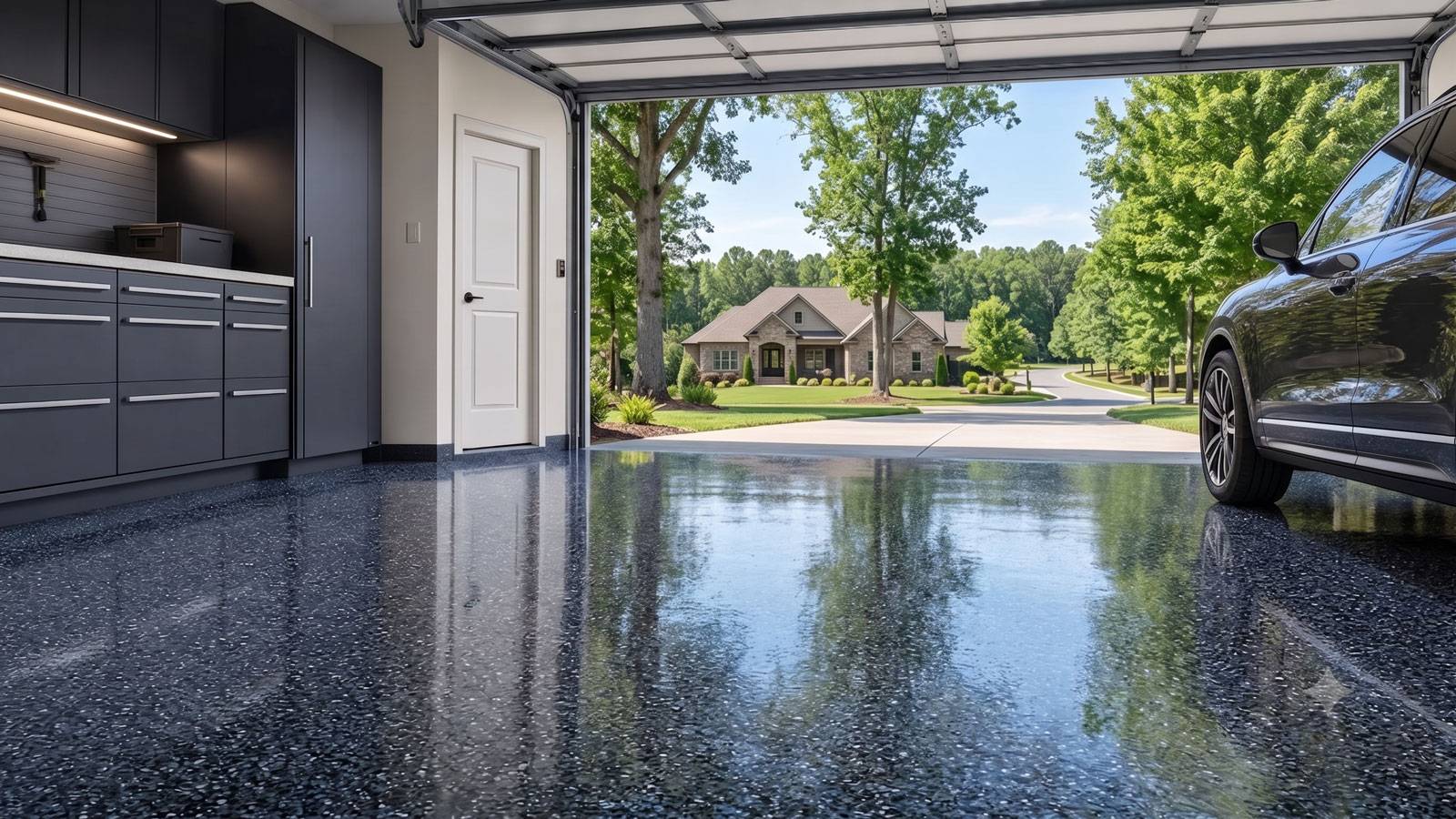
Garage Floor Coating in Leland, NC
Floor Coating Services in Leland, NC
Leland garage-floor projects need a realistic assessment of rain entry and existing concrete rather than assumptions about coastal exposure. Leland's 2020 stormwater narrative reported 23,544 residents. The same report described 20.15 square miles of jurisdiction and 65% residential land use. They describe public conditions, not a private concrete diagnosis. Inspect the actual slab.
Older town sections rely on ditches while newer developments often use privately maintained swales and retention ponds. Leland's 2025 stormwater application fee starts at $250 per acre for residential developments. Along the Cape Fear coast, rainwater can arrive from a roof or driveway, while sand and wet tires bring a separate type of moisture indoors. Check whether water enters at the door or persists without wet vehicles; public drainage cannot answer for a private slab.
A resilience study reviewed two 42-inch culverts crossing Lanvale Road. A sound, well-prepared floor can be easier to clean with epoxy, polyaspartic or decorative flakes, but resin cannot stop active water intrusion. The installation proposal should describe concrete grinding, repairs, joint handling, chosen texture and manufacturer-specific cure time. Homeowners using the garage for storage, vehicles or beach equipment should plan temporary access and discuss regular grit cleanup.
Local Market Insight
Leland's 2020 stormwater narrative reported 23,544 residents. Leland's 2025 stormwater application fee starts at $250 per acre for residential developments. These two documented points frame Leland's public drainage context; actual garage water or surface deterioration must be evaluated individually. A coating estimate needs an inspection, not generalized flooding claims.
What Affects the Cost of Garage Floor Coating in Leland?
In Leland, garage size alone is an incomplete price guide. The same report described 20.15 square miles of jurisdiction and 65% residential land use. This is public planning context rather than evidence of a damaged residential slab. An estimator should identify old sealer, paint, repairs and access before adding preparation charges.
Compare a written scope for grinding, cracks, coating layers, decorative finish and actual parking downtime. Where rainwater crosses a doorway, separate exterior drainage remedies from the flooring quote.
- Current concrete finish: A garage can contain old paint, epoxy, sealer, patches or a later replacement slab. Inspect the actual floor instead of inferring its condition from the surrounding home's age.
- Local stormwater distinctions: Leland's 2020 stormwater narrative reported 23,544 residents. Municipal stormwater data is useful local background, but private driveway drainage and slab moisture require separate evaluation.
- Rain at garage entrances: The same report described 20.15 square miles of jurisdiction and 65% residential land use. Check roof downspouts, driveway grades and the door seal rather than treating a public drainage project as proof the home is protected.
- Cracks, joints and contamination: Pitting, previous repairs, oil and moving joints change the surface-preparation scope. A decorative coating cannot halt structural concrete movement or cure a drainage defect.
- Storage and edge details: Garage shelves, steps, drains, workbenches and household equipment affect machine access. Ask which items must move and whether all intended floor edges can be prepared.
- Traction and curing: Sand, wet shoes and rainwater make finish texture worth considering. The product layers and manufacturer curing conditions, not a generic one-day promise, determine vehicle return.
Call for a clear, project-specific estimate — or request one online.
Stormwater Context and Garage Doorways in Leland
Leland's 2020 stormwater narrative reported 23,544 residents. The same report described 20.15 square miles of jurisdiction and 65% residential land use. These details describe local stormwater responsibilities or geography but do not determine the drainage behavior of an individual residence. An installer should visit the specific garage, not infer that proximity to a waterway means flooding or that a public drainage system guarantees a dry floor.
Older town sections rely on ditches while newer developments often use privately maintained swales and retention ponds. It is worth observing what happens during heavy rain: does water flow along the driveway toward the door, collect beneath gutters or simply arrive on a wet vehicle? Each pattern suggests a different response. A coating can make sound concrete easier to clean, but cannot correct a recurring flow of exterior water.
Leland's 2025 stormwater application fee starts at $250 per acre for residential developments. That jurisdictional fact matters if a household needs drainage repairs, because responsibility for roads, private ditches and stormwater systems can vary. The floor contractor should distinguish necessary concrete repairs from unrelated exterior grading work rather than claim a coating resolves both.
The slab itself should be checked for paint, sealer, earlier coatings, oil, cracks, active joints and repaired sections. Any moisture concerns should be assessed before resin is applied. Appropriate grinding and cleaning are essential to adhesion regardless of how advanced the topcoat sounds.
Planning a Leland Coating Project for Daily Use
A resilience study reviewed two 42-inch culverts crossing Lanvale Road. This local condition or planning distinction may shape what a homeowner asks about, but only site measurements can establish the work needed. Older homes can have repoured garage slabs; newer homes can have curing compounds that change mechanical preparation. A written estimate should describe the real concrete rather than its assumed age.
A garage used for vehicle parking and household or coastal equipment needs access to steps, cabinet bases and doorway edges. A smooth finish may clean differently from decorative flakes, while a more textured surface changes traction under wet shoes. Consider storage relocation and where cars will park while the product cures.
Compare complete epoxy and polyaspartic systems by surface profile, repair scope, layers, finish and manufacturer-supported cure conditions. A good proposal will explain how the system will bond to the existing slab and what maintenance is still required after installation.
- Identify any prior paint, sealer or resin.
- Inspect cracks and old concrete patches.
- Observe threshold water during rain.
- Separate wet-car puddles from persistent dampness.
- Plan storage removal and access to edges.
- Get written cure and cleaning instructions.
Frequently Asked Questions
What local water-management fact matters in Leland?
Leland's 2020 stormwater narrative reported 23,544 residents. This documents the community's public context, but it cannot establish moisture beneath your garage. Check your driveway, door seals, gutter flow and actual concrete before selecting materials.
Does coastal rain mean every Leland garage needs moisture treatment?
No. Rainfall, nearby tidal water and humidity do not themselves diagnose vapor movement through a slab. An installer should evaluate symptoms and test if warranted before selecting a system.
Will a floor coating fix Leland garage flooding?
No. A coating can support easier cleaning on sound prepared concrete, but cannot stop active exterior runoff. Correct drainage, grading or door-seal problems separately from the decorative floor project.
Is epoxy or polyaspartic better in Leland?
Neither is automatically better. Preparation, coating layers, traction, temperature and time before vehicles return determine suitability. Compare complete installed systems based on the property's concrete and household priorities.
What should a Leland written estimate describe?
Ask for old-finish removal, grinding, repairs, texture, edge details, curing and cleanup. Account for stored belongings and parking during installation, and identify any drainage corrections excluded from the coating scope.
Leland Neighborhoods & Local Context
Phone Quote Line
Speak with a floor coating professional about your project and a realistic estimate range.
(910) 877-8227Typical Project Cost
$3,000–$5,500
Typical range for a two-car garage. Concrete condition, prep work, coating type, and finish options influence final scope.
Helpful Guides