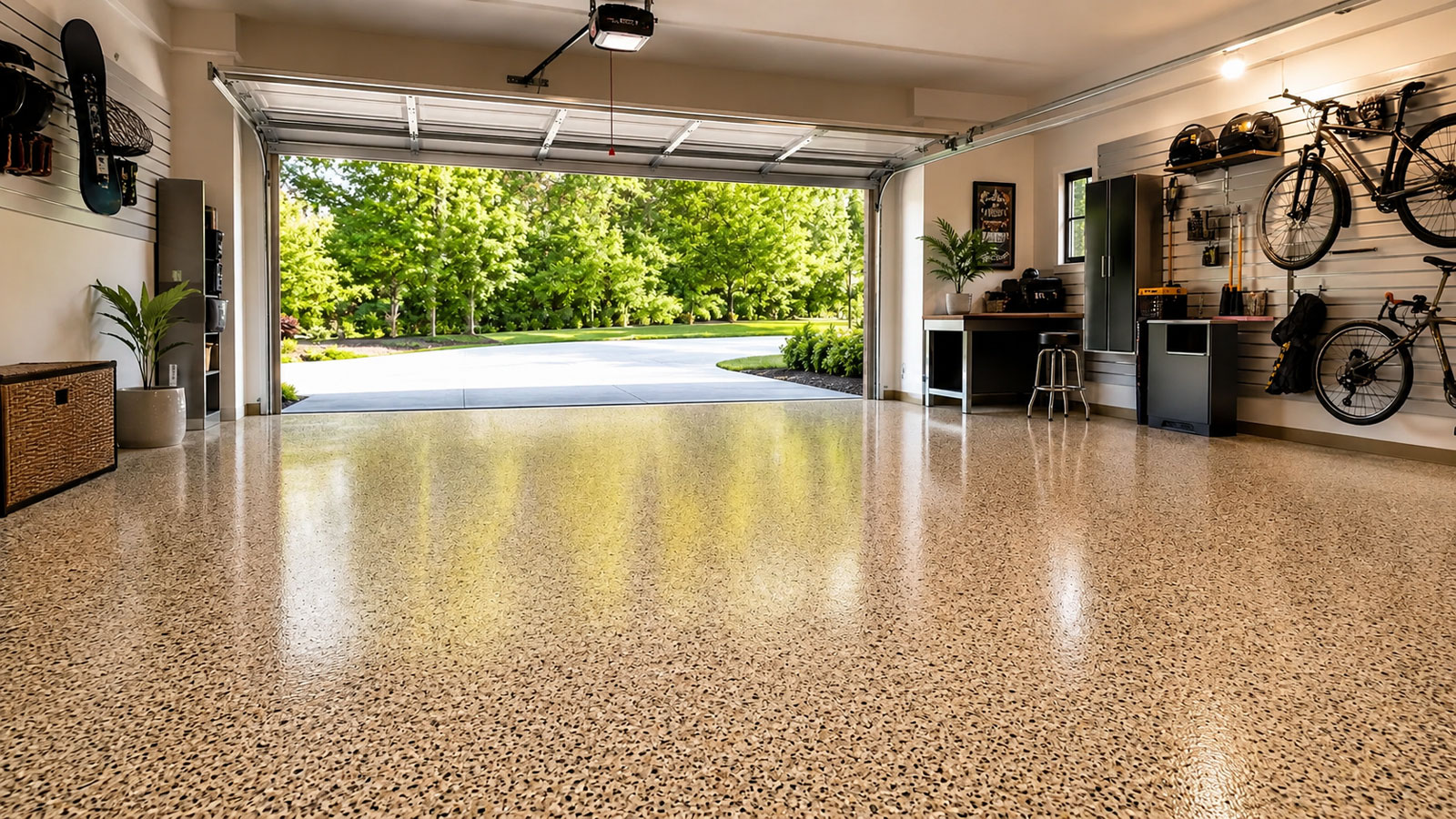
Caring for Your Garage Floor Coating
Simple care practices for a clean, protected, and long-lasting floor in the Wilmington/Leland coastal environment.
The Good News: It's Easy
A professionally coated floor can be easier to sweep, mop, and maintain than bare concrete. Regular sweeping removes grit, and prompt spill cleanup helps reduce unnecessary wear.
For most homes, basic cleaning with water, mild detergent, and a soft mop or brush is enough. The most important practice is avoiding harsh or abrasive cleaners that can dull the finish.
Routine Maintenance Tasks
Sweep or dust mop
Remove loose sand, pollen, dirt, leaves, and grit with a soft-bristle broom or microfiber dust mop. This helps keep abrasive particles from being ground into the surface by foot traffic, tires, or stored items.
Damp mop with mild cleaner
For a deeper clean, mop with warm water and a mild floor cleaner. Avoid harsh acids, bleach, ammonia, wire brushes, and abrasive pads that may dull or damage the finish.
Clean up spills
Wipe up oil, gasoline, brake fluid, coastal grime, and other household spills as soon as practical. Professional coatings are made for normal garage use, but long exposure to harsh substances can affect a finish.
Rinse away sand and grit
In the Wilmington/Leland coastal climate, sand, wet debris, and windblown grit can build up. Remove them with a gentle rinse and mild cleaning as needed, then allow the floor to dry.
Check for chips or wear
Look for chips, scratches, dull areas, or unusual wear. Minor issues can often be addressed more easily when noticed early.
What to Avoid
A professionally coated garage floor is durable, but harsh chemicals, abrasive tools, and prolonged exposure to certain materials can dull or damage a finish over time.
Wilmington/Leland Coastal Considerations
The Cape Fear climate creates a few practical maintenance considerations for coated concrete.
Humidity and Rainfall
Wilmington/Leland's warm, humid climate and frequent rain make moisture management and ventilation useful concerns for garages. If moisture appears to be coming through a slab or affecting a coating, have the floor evaluated.
Tracked Sand and Coastal Grit
Beach trips, wet shoes, windblown grit, and coastal grime can bring abrasive material into the garage. Regular dry sweeping is a simple way to keep the finished surface looking cleaner.
Pollen and Organic Debris
Pollen, leaves, and damp organic debris are common seasonal visitors in the Cape Fear region. Cleaning them as needed helps reduce staining and keeps the floor easier to maintain.
Heat and UV Exposure
Strong coastal sun can matter in garages with direct light. Prompt cleanup of vehicle fluids and a coating system suited to the space help protect the finished surface over time.
Recommended Cleaning Approach
Related Guides
Questions About Your Garage Floor?
Call to talk through maintenance, repairs, recoating options, or next steps for your garage floor.